When Strong Women Start People Pleasing at Work: Why even capable women fawn when their career is on the line, and how to start breaking the pattern.
October 8, 2026
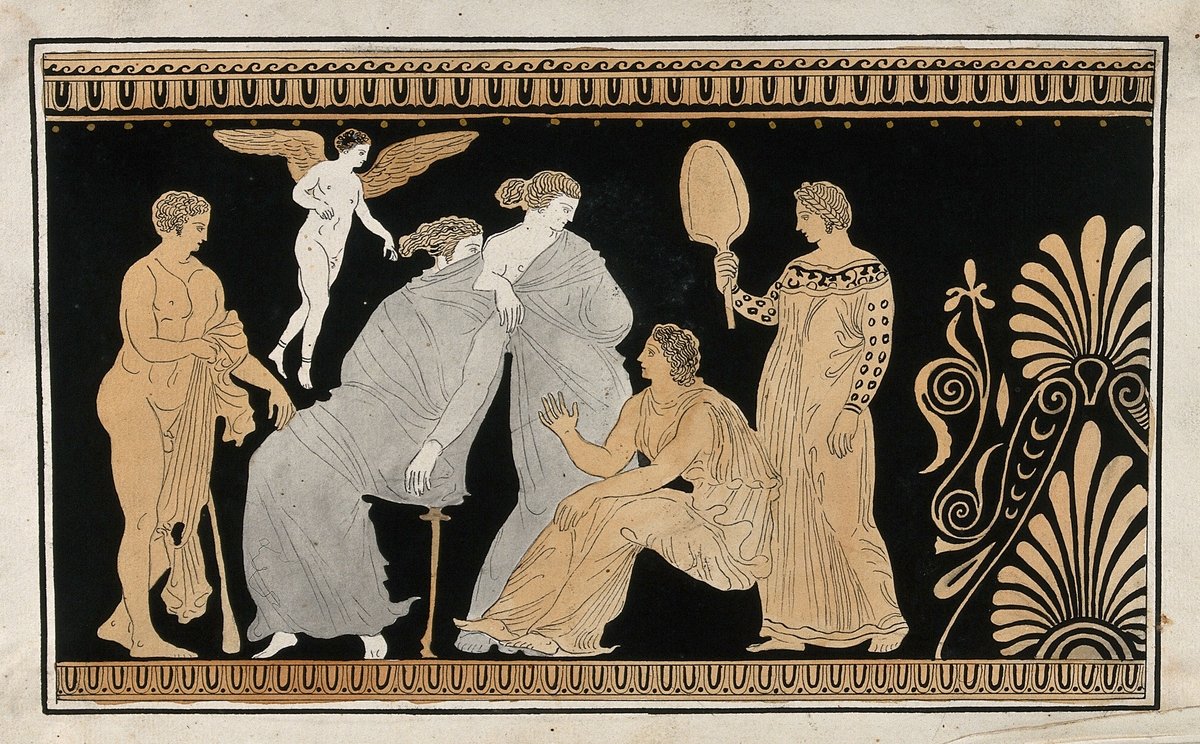
image: Demeter, a woman and a servant holding a fan, Demophoon, and a winged figure. Watercolour by A. Dahlsteen, 176 AD .
When Strong Women Start People-Pleasing at Work
Why even capable women fawn when their career is on the line, and how to start breaking the pattern.
“I was always afraid,” said Megan, 45. “If I did do something or if I had to leave to take my kids to soccer, I was getting punished for it.”
For two years, until she was laid off, Megan handled her boss’s repeated insults the only way she knew how: by pleasing her at all costs. “I’ve always kind of wanted to please people and impress,” she told me. “I’m the oldest, and you kind of always have to pave the path and be the example.”
Her boss would call at seven o’clock on Friday nights, demanding to know why she wasn’t answering. “I’d be reading my son a book in bed and I’d be getting pings on my phone from her,” Megan said. “My heart would be racing.”
As a psychotherapist who works with ambitious women navigating difficult work environments, I see this pattern often. Psychotherapist Pete Walker calls it fawning: trying to soothe a threat by appeasing the person posing it. It is the “fourth F” of trauma responses, alongside fight, flight, and freeze.
In my office, fawning at work often looks like over-apologizing for things that aren’t your fault, saying yes before you’ve had a chance to think, or rewriting a simple email five times so it can’t possibly be read the wrong way. It looks like scanning your boss’s face in a meeting to gauge their mood, rehearsing difficult conversations in your head, and taking the blame just to smooth things over. It’s laughing off a cutting remark, volunteering for the project no one wants, and staying late so no one can question your commitment. From the outside, it can look a lot like being a dedicated, high-performing employee.
For ambitious women, this is what makes fawning so hard to name and to shift. The behaviors that keep a volatile boss calm are often the ones that earn praise, promotions, and a reputation for being unflappable. The pattern gets rewarded, so it gets reinforced. Over time, it gets hard to tell whether you’re a badass or just really good at surviving.
Clinical psychologist Dr. Ingrid Clayton describes fawning as a way of coping with both relational trauma and the hierarchies we all live within. “The body sort of knows its pecking order. And if you’re not at the top of that food chain, so to speak, the body might not go to the fight response because it knows actually fighting could make it worse.”
Not everyone who fawns is a chronic people-pleaser. Denise, who is in her 30s, quit her job last year because of an abusive boss and is now starting her own business. Before that job, she saw herself as someone who spoke up. “If something I see is wrong, I’m usually very vocal to call that person out, always. What is right is right. What is wrong is wrong.” But in this role, she was a private contractor, with no protection or job security. Her boss made it clear that crossing him could get her contracting company blacklisted. “So it’s like, okay, whatever you say, boss.” She found herself morally hijacked. “I used to abide by what he liked and not abide by what is right or wrong.”
In a single moment of danger, fawning can be adaptive. If a big, scary dog is charging toward you, putting your hands out and saying in a friendly voice, “Hi, puppy” might be your best tactic, even as another part of you wants to run. The risk comes when fawning becomes the only way you navigate a close or ongoing relationship. When we meet our no’s and our overwhelm with a smiling yes, over and over, the fight response has nowhere to go. That trapped energy can show up in the body as increased heart rate, higher blood pressure, and inflammation.
Denise, who had always seen herself as confident and hardworking, began to doubt herself. “I had lost that mojo,” she said. “Totally and completely lost it.” Megan felt sick every day, with stomach pain and a tight chest, and her Oura ring kept flagging that something was wrong. “I’m like, I’m not sick,” she said. “This is just my state right now.”
Fawning kept Megan and Denise safe when they had few other options. But a strategy that protects you in the short term can wear you down when it’s the only one you have.
If you’re noticing your own fawning response in difficult work relationships, here are three things you can do now:
Notice and normalize it. Fawning is not a weakness. It’s your nervous system doing exactly what it learned to do to stay safe. Naming it as a protective response, rather than a character flaw, is the first step toward shifting the pattern.
Practice small no’s in low-stakes situations. Start rebuilding your nervous system’s sense of safety around disagreement somewhere low-risk: a restaurant order, a friend’s plan, a minor scheduling change. Each small “no” gives your body evidence that disagreement doesn’t lead to catastrophe.
Seek trauma-focused therapy. Because fawning is a body-based survival response, not just a thinking pattern, modalities like EMDR or somatic therapy, which work directly with the nervous system, are often more effective than talk therapy alone.
Some names and identifying details have been changed to protect interviewees’ privacy.
Jessie Cozza, LCAT, is a New York–based therapist in private practice specializing in supporting ambitious women through toxic dynamics. Learn more at jessiecozzatherapy.com.
